“I had put Lighthouse posters on site. I never imagined that one day, they would be for me.”
Daniel has worked in construction for more than twenty years, helping to build homes and communities. He recently found himself at risk of losing his own home. When practical help was difficult to find, support from within his industry helped him begin rebuilding his life.
Like many in construction, Daniel has spent his career working hard and progressing, eventually becoming a senior construction manager.
Here is his story, in his own words, and how the Lighthouse supported him through a dark time:
“Over my career, I worked on homes, regeneration schemes and major developments, supported my family, managed people and projects, and contributed financially to the country throughout those years.
I mention that because it explains why what happened later was such a shock. I had spent most of my adult life working, contributing, solving problems and largely looking after myself and my family. I believed that if life ever went catastrophically wrong, the systems and institutions around us would be there when genuinely needed.
From 2023 onwards, my life changed dramatically. I experienced severe domestic, emotional and financial abuse. Over time, I became financially drained and psychologically exhausted. My mental health deteriorated significantly and I later required medication, therapy and psychiatric support, eventually being diagnosed with complex PTSD.
What was particularly difficult was asking for help. Perhaps part of that was because I am a man, and perhaps because I had spent most of my life being the person who solved problems rather than the person asking somebody else to solve them. It took me months to find the courage to speak openly about what had happened and to say, “I need help.”
Once I finally started talking, I could not stop. I contacted charities, organisations, authorities, people I knew and people from my professional life. Eventually it felt as though everybody knew my story. And yet practical help remained extraordinarily difficult to find.
I received sympathy, advice, telephone numbers, websites and referrals. Some people listened, but very often I was simply passed from one place to another while the reality of my situation remained unchanged. Some of my experiences with services I had expected to protect or assist me left me feeling more harmed rather than supported. That made things even harder. When somebody finally finds the courage to say, “This happened to me. I cannot cope anymore. I need help,” and then very little practical support follows, it can leave them feeling even more alone.
Some longstanding friendships disappeared too. A small number of newer friends stood beside me, and I will never forget them.
And then there was Lighthouse. Lighthouse was particularly meaningful to me because I already knew the charity long before I ever needed it myself. During the good years of my career, I was the construction manager putting Lighthouse posters on site noticeboards and signposting operatives towards them if I thought someone might need help.

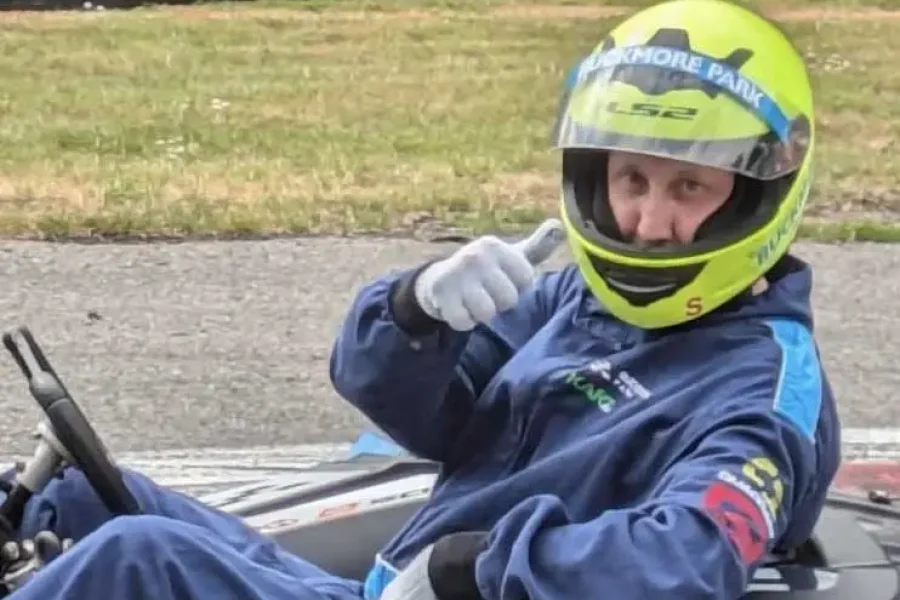
There is a bit of meaning behind this particular photo. It was taken around April 2025, at a time when I had only recently begun to understand and accept that I had been in an abusive situation and that my mental health had been affected. It was the first time after two years that I had gone out and tried to reconnect with life again.
At the time, I thought the worst was behind me, but in reality what followed became even harder, with my financial collapse, worsening mental health, homelessness risk, and all the difficulties that came afterwards.
So although it is just a photo, it does represent an important moment in my journey.
I never imagined that one day I would be the person making that call myself. My caseworker listened, treated me with dignity and compassion, and made me feel that behind all the circumstances and paperwork he could still see the human being who was struggling.
With the last strength and resources I could find, I eventually secured private accommodation and avoided homelessness. But when I arrived there, I had very little with which to start again. Lighthouse stepped in and helped me. In financial terms, what they provided may appear modest. But measuring that help only in pounds completely misses what it meant.
At one point I was struggling even to buy food. What hurt almost as much as the lack of money was the feeling that after finally finding the courage to tell people what had happened, nobody was going to reach out a hand. Lighthouse did.
After so many conversations that ended with another number to call or another organisation to contact, somebody finally turned compassion into action. That mattered enormously.
After spending more than two decades building things for other people, homes, communities and developments, there was something deeply meaningful about an organisation within my own industry helping me while I was trying to rebuild myself.
I am still rebuilding. My financial situation remains difficult and the psychological consequences of what happened will stay with me for many years to come. But I am working, I have a home, and I am moving forward.”
Daniel reiterates that he wants anyone reading this to know that there can be life after rock bottom. Things change. You can rebuild.
“I am not pretending everything is perfect now, because it is not. But I am here. I survived it. I am working, I have a home, and I am rebuilding a life that at one point I struggled to imagine having again.
For years, I had put Lighthouse posters on construction sites hoping that somebody who needed help might notice them. I never imagined that one day, that somebody would be me. Lighthouse helped me when I needed it. My hope is that one day I will be able to do the same for somebody else.”
If this resonates with you and you need support, reach out today. Visit our 24/7 support page to find out more.