

A demanding industry needs strong support
Construction is a physically and emotionally demanding industry. For Stress Awareness Month, we’re looking at practical ways to prevent stress and burnout.
Tight deadlines, responsibility for safety, long hours and changing sites come with the job.
Pressure can be useful. It helps people stay focused and get work done. But when that pressure doesn’t ease, stress can start to build. Over time, that can lead to burnout.
Stress Awareness Month is a chance to pause, take stock, and think about what helps keep pressure manageable, both as individuals and as employers.
Stress is common, but it’s not a personal failure
Stress is one of the most common challenges people in construction talk about, and recent data suggests it’s becoming more frequent than it was a few years ago.*
- Nearly 25% on people in construction experience stress every day.*
- 60% of people experience stress at some point during the year.*
- Day to day, stress is reported more often than anxiety or depression.*
Comparisons with previous years show that more people are now experiencing stress regularly than in 2020.*
While construction has always been demanding, changes to working patterns, increased pressure on projects, and less time to properly switch off have meant that stress is becoming more common across the industry.
Why construction can feel pressurised
A lot of the stress people experience comes from how the work is organised.
Workers most often point to heavy workloads, tight deadlines, staffing pressures, and issues with planning and communication.*
These pressures are especially familiar to those working on site, those managing people and those managing projects alongside delivery. It’s often about balancing what needs to be done with the time and resources available.
How ongoing stress can affect your work
Short bursts of pressure are usually manageable. Ongoing stress is different.
Many people experiencing stress also report feeling constantly tired or struggling to concentrate.*
When fatigue builds and focus drops, everyday tasks can take more effort. It becomes harder to stay sharp, spot risks or make clear decisions. That’s why managing stress isn’t just about feeling better, it also plays a part in working safely and effectively.
What employers can do
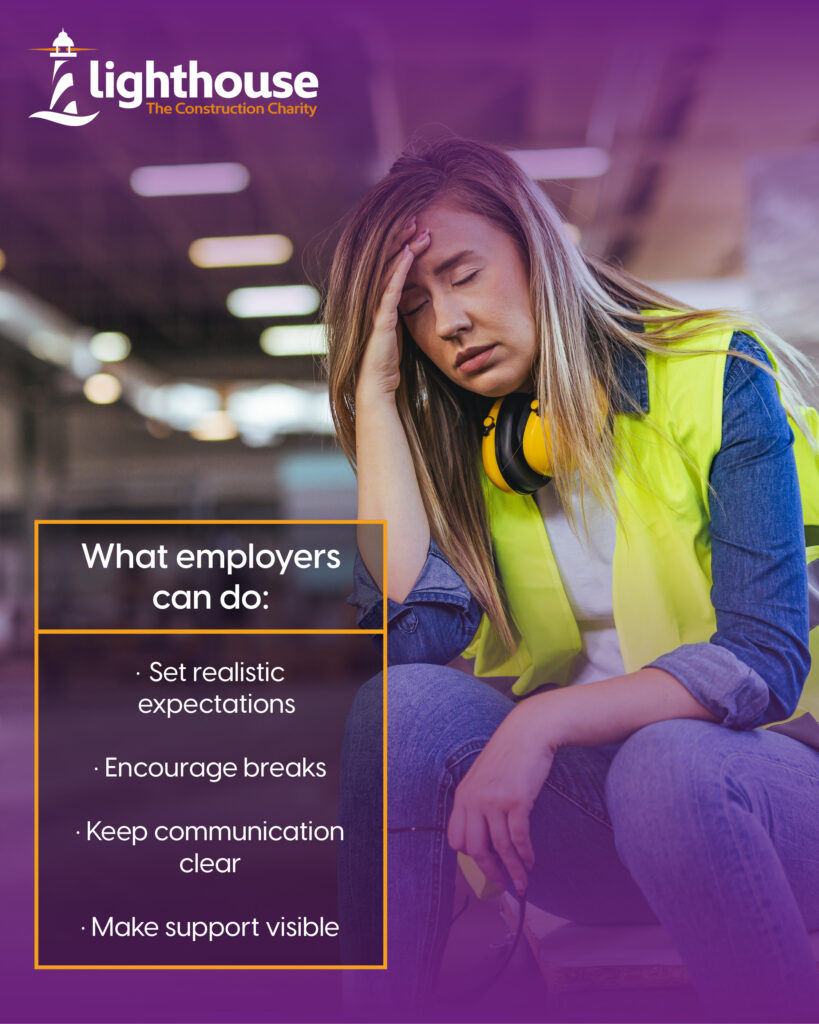
Small changes can make a big difference. Setting realistic expectations, encouraging breaks, and keeping communication clear can all help reduce unnecessary pressure. Making support visible and normalising conversations about workload and stress also helps people speak up earlier.
It’s important that when employees do speak up, their concerns are acknowledged and accommodated where possible. Tight deadlines and external factors affect us all, but small changes and support can alleviate a huge amount of stress.
What individuals can do
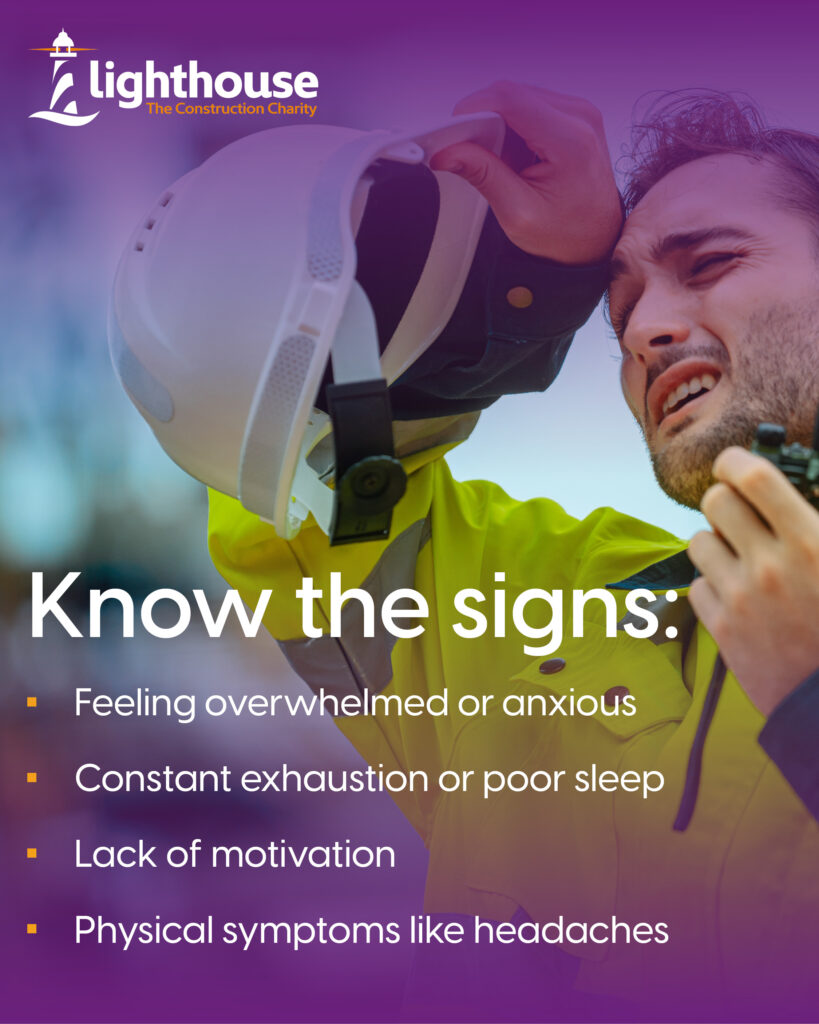
Noticing the early signs matters. Feeling constantly exhausted, snappy or unable to switch off can be a sign that stress is building. It’s important to take time for yourself and to try to find a productive outlet for your stress.
- Exercise can be an incredible release. Try going to the gym, walking outdoors, or really anything that gets your heart rate up.
- Get enough sleep. Sleep is undervalued and absolutely essential to your wellbeing.
- Talk to your manager or colleagues. Chances are, they’ve been in your shoes before.
Burnout rarely happens overnight. It usually builds slowly, which means it can often be prevented. Following these simple steps might just stop things from getting to crisis point.
Stress doesn’t affect everyone in the same way
Everyone responds to pressure differently. Some groups, including younger workers, site-based roles, neurodivergent workers and those juggling supervision with delivery, report higher levels of stress.*
Understanding this helps teams set more realistic expectations and create working environments that support different needs, rather than taking a one-size-fits-all approach.
Download our ‘Stress Awareness Month’ assets, including graphics and social media copy.
Support is available
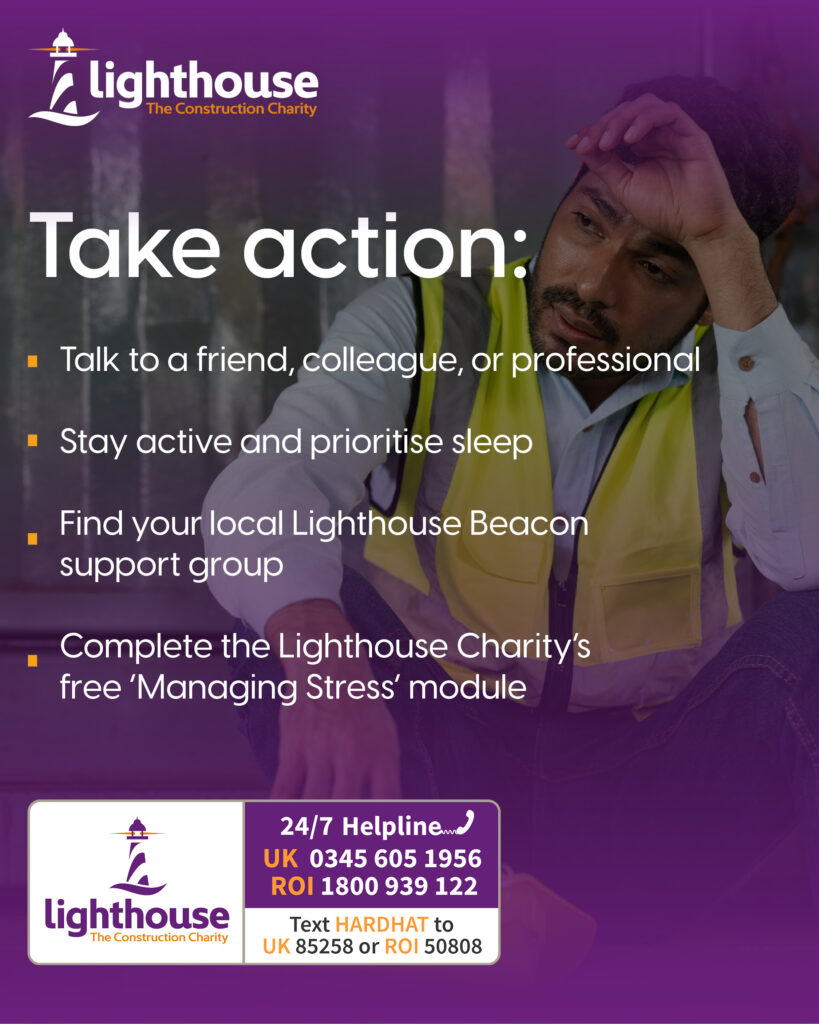
If stress is starting to affect your sleep, concentration or your mood at work, confidential support is available.
Whether you’re dealing with a busy period or longer-term pressure, you don’t have to wait until you reach breaking point to get help
Click through the slides below to find out more about the free, confidential support services available to you.