
Safety starts with you.
When we talk about safety, we often think of PPE, risk assessments and site rules. But safety doesn’t begin when you arrive on site. It begins long before then. Your sleep, stress levels, energy and general wellbeing all influence how safely you work.
Work Safely Month highlights both sides of the picture. How you feel off site affects how you show up on site, and how safely you work throughout the day.
Safety starts before you step on site
Even the most experienced workers can make mistakes when tired, distracted or run down. Everyday wellbeing issues can make it harder to follow procedures or spot hazards.
Factors that affect safety include:
- Lack of sleep which slows reactions, reduces coordination and increases the chance of mistakes
- Brain fog or stress which makes it harder to concentrate, check equipment properly or follow instructions
- Fatigue which reduces physical strength and stamina, raising the risk of slips, trips and overexertion injuries
- Poor nutrition or dehydration which affects judgement and the ability to work safely in demanding environments
A small lapse on site can have big consequences for you and for those working around you.

Strengthening safe working habits on site
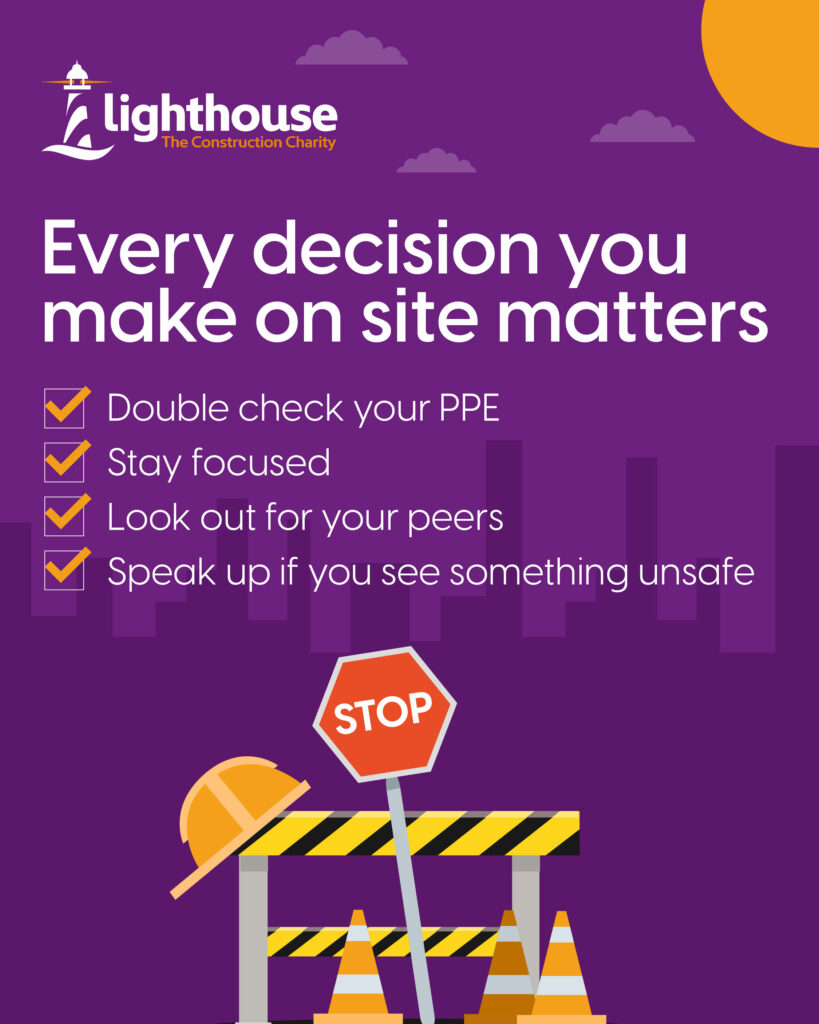
Work Safely Month also focuses on the practical steps everyone can take once they are on site. These small actions help teams stay alert, prepared and protected.
Simple actions that support safe working:
- Check your PPE at the start of each day. Damaged equipment can put you at risk
- Take part in task briefs and toolbox talks
- Take your time with safety checks. Rushing often leads to avoidable incidents
- Use machinery and tools only as trained. Cutting corners increases the risk of serious injury
- Flag hazards early and report any ‘near misses’. A loose cable or uneven surface could cause harm to the next person
- Communicate clearly with your team. Everyone works safer when information is shared
Take breaks throughout the day. Fatigue builds gradually and affects judgement long before you notice it
Taking care of yourself off site
Looking after yourself outside of work helps you arrive on site in a safer, more focused state.
Try focusing on:
- Rest by keeping to a consistent sleep routine
- Fuel by eating regularly and staying hydrated
- Reset by managing stress before it builds and speaking to someone if you are struggling
- Routine by preparing ahead, packing your PPE and planning your work day so you are not rushing
When you are well, you are more focused, more aware and better equipped to work safely.
Learn more through our Wellbeing Academy
Our eLearning courses offer short, accessible lessons that help workers and teams improve both safety and wellbeing.
Courses include:
- Managing Stress
- Understanding Anxiety
- Building Resilience
- Mindfulness
- Self Care
- Work-Life Balance
- Taking Control: Drugs and Alcohol
Explore the full range of courses on our Wellbeing Academy.

Further guidance from the HSE
For more information on staying safe on site, including legal duties, industry best practice and practical resources, visit the Health and Safety Executive’s construction guidance. It covers everything from managing risks to working at height, site welfare, equipment safety and more.
Need To Talk?
If you or someone you know is struggling, help is never far away. We offer free and confidential support to anyone in the construction community. Whether you’re dealing with stress, anxiety, financial worries or just need someone to talk to, there’s a way for you to reach us.
Click through the slides below to find out more about the free, confidential support services available to you.
Download our ‘Work Safely Month’ assets, including graphics and social media copy.