


























Assets_Header

Power up your financial health.

Money can feel like one of the hardest things to manage, especially when income changes, hours vary, or unexpected expenses crop up at the worst possible time. But you don’t have to overhaul your whole life to feel more in control.

This month, we’re focusing on simple steps that help you power up your financial health, one small top-up at a time.

Just like a battery, your financial wellbeing stays strongest when you add charge regularly. Small contributions, tiny habits, and a few minutes of checking in can build real stability over time and make a world of difference when you need extra power for bigger or unexpected costs.

Why we’re talking about it

Money worries are incredibly common, but we rarely talk about them honestly. Between rising living costs, seasonal pressures and the normal ups and downs of working life, many people end up feeling stretched or in debt far more than they might realise. It’s completely normal. But staying silent makes it feel heavier than it needs to be.

Personal Finances Month is here to give you space, tools and straightforward guidance to help you understand where you’re at, take small steps forward, and feel a bit more confident with your money.

The power of small steps

When it comes to improving your financial health, small changes often have the biggest impact. You don’t need a huge budget or a full reset, just tiny habits that quietly build momentum.

A quick example: the £520 top-up

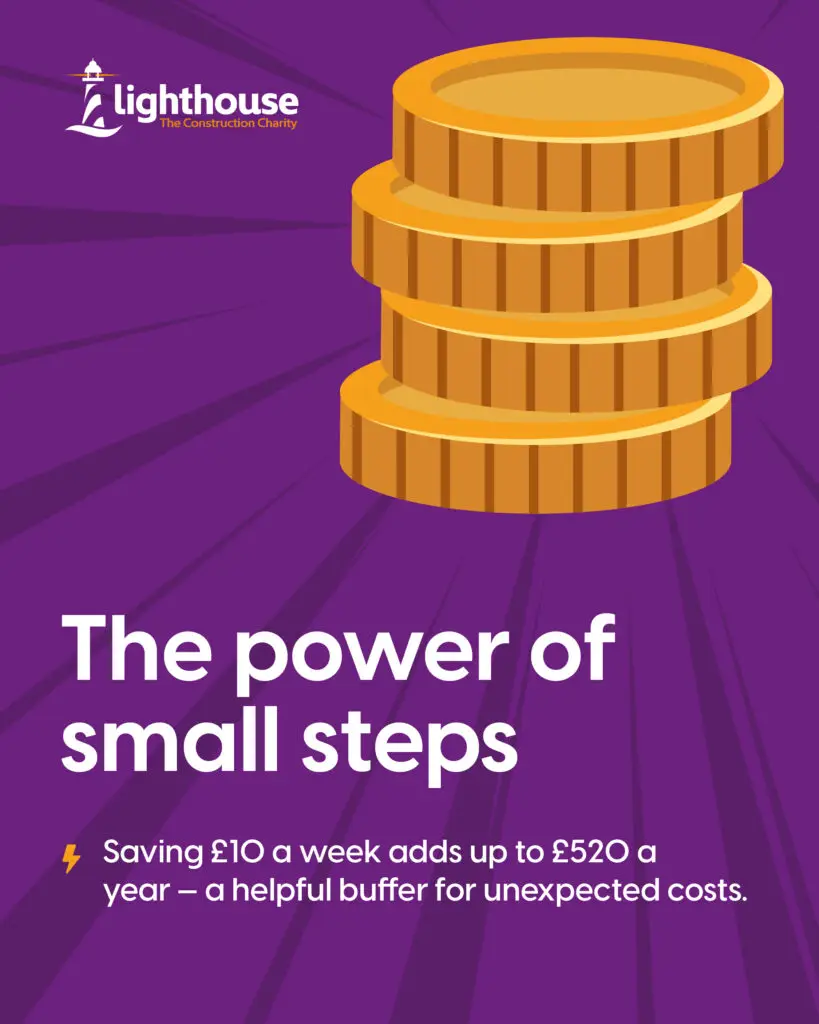
Saving £10 a week might not sound like much. It’s the cost of 2 pints at the pub or the cost of eating packed lunches for a couple days. But keep it going, and by the end of the year you’ve got £520, giving you breathing room to cover unexpected bills, replace tools, put towards a holiday, or take the edge off Christmas costs.

Budgeting tips that actually work

These everyday approaches are realistic, flexible and designed for busy lives:

  1. The five-minute money check-in

A quick look at what’s come in and gone out each week can help you spot problems early and reduce surprises.


  1. Round-up savings

If your banking app lets you round up purchases and save the difference, switch it on. It’s painless and builds quietly in the background.


  1. Give every pound a purpose

Instead of letting leftover money disappear, assign it to something: savings, travel, birthdays, tools, anything that matters to you.

  1. Track just the “big three”

If tracking everything feels intense, focus on your three biggest expenses. Reducing just one of them gives your financial battery a significant boost.


  1. Use simple budgeting apps

Most banks now give you free tools that break down your spending and show patterns. Let the tech do the heavy lifting.

Important dates in the personal finance calendar

Knowing what’s coming up helps you stay prepared and helps stop unexpected costs from draining your battery.

Extra support: budgeting, tax, and managing debt

If you want to take a few steady steps towards powering up your financial health, these free and trusted resources can help you get started.

Free financial wellbeing courses on the Wellbeing Academy

Strengthen your financial skills with our e-Learning courses, designed for anyone working in construction:

  • Bang on Budget – Build a realistic, personalised budget that fits your life.
  • Controlling Credit – Understand borrowing, interest and how to stay in control.
  • Tackling Debt – Practical steps for managing and reducing debt.


All courses are free and can be completed at your own pace.

Budgeting and managing day-to-day money and spending habits

  • Your banking app – Most now include spending breakdowns, round-ups and monthly limits.
  • MoneyHelper Budget Planner – Simple, clear budgeting tool to help you see where your money goes.
  • Free debt-free budgeting tools such as:
    • National Debtline Budget Tool (UK)
    • MABS Budgeting Tools (Ireland)

Tax, take-home pay and expenses

  • Check or update your tax code via the HMRC app or GOV.UK.
  • CIS/self-employed guidance on GOV.UK for what you can claim back.
  • Tax calculators such as ListenToTaxman (UK) or Revenue.ie calculators (Ireland) to estimate your take-home pay.

And remember, you’re not alone

If money worries are affecting your wellbeing, stress levels or home life, the Lighthouse Charity is here to help.

Our team can support you with:

  • Budgeting guidance
  • Applications for financial or emergency support
  • Emotional support if things feel overwhelming
  • Practical advice during income changes
  • Benefits and entitlements checks

Click through the slides below to find out more about the free, confidential support services available to you.

Live Web Chat Service
Our live web chat connects you directly with our helpline advisors—no bots, just real support in real time. If privacy is a concern, this service offers a discreet way to talk, wherever you are. You can also chat in over 100 languages. Available Monday–Friday, 9am–6pm. Click the Live Chat icon in the bottom right hand corner of the screen to start a conversation.

Download our ‘Personal Finance Month‘ assets, including graphics and social media copy.

Share the Post:

Related Posts