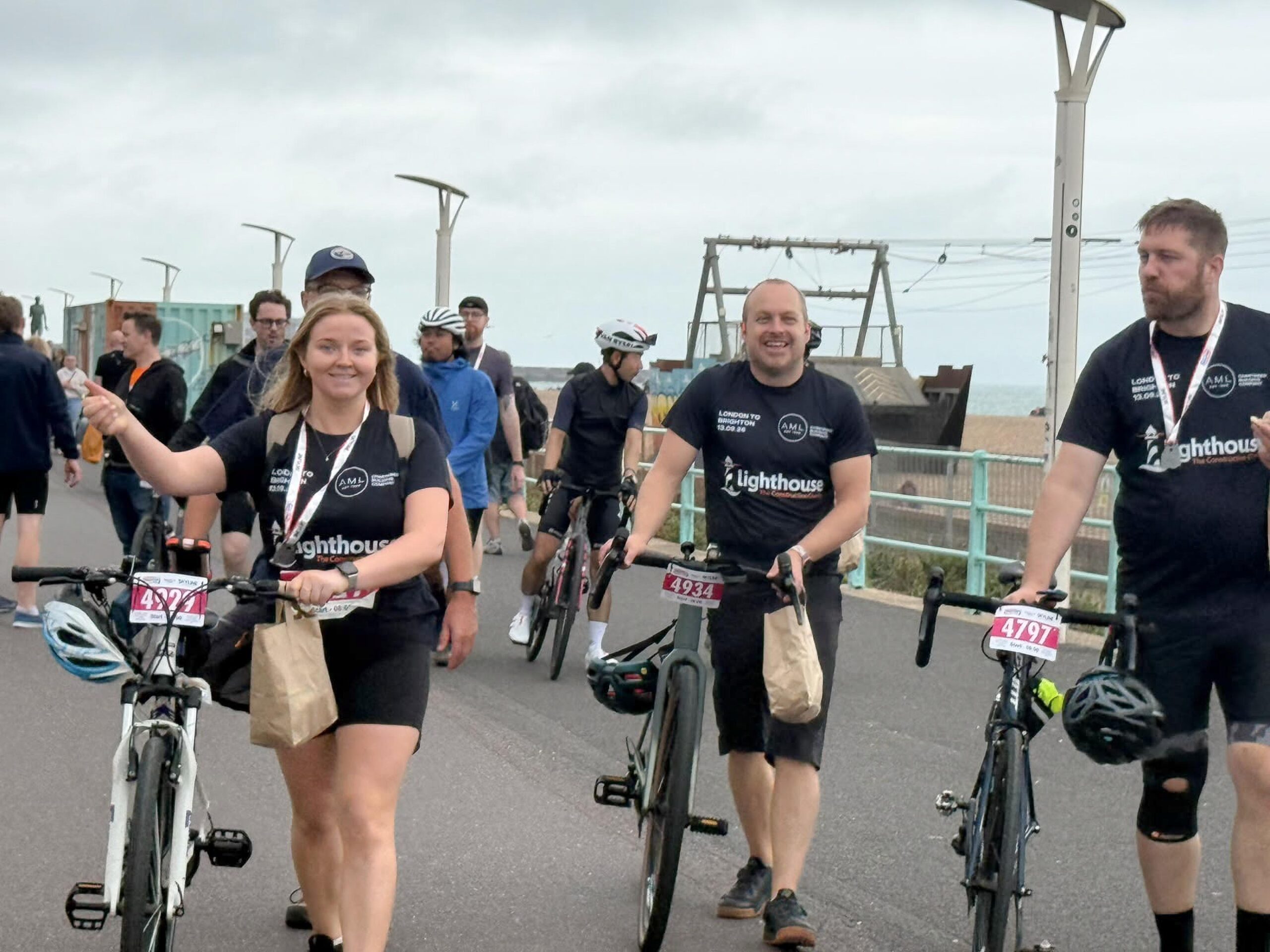
Bill Hill, CEO ,Lighthouse Construction Industry Charity
A few weeks ago we published the Social Value Report for the Building Mental Health Mental Health First Aid Programme with the Construction Industry Training Board (CITB) and MHFA England. It was very positive to see that for every £1 invested there has been £5.50 of Social Value to society. As a result of the programme we now have 284 Mental Health First Aid Instructors trained, who have delivered 3349 Mental Health Awareness Courses and have skilled up over 5000 front line Mental Health First Aiders. The construction industry now has the highest number of Mental Health First Aid Instructors of any other vertical industry channel which is a huge achievement.
But that good news was overshadowed when we received the findings of research we commissioned with Glasgow Caledonian University which showed an increase in suicides in construction from 2015 to 2019. Even more worrying, is that these statistics are pre-pandemic so the full impact of Covid-19 won’t be revealed until further data is released in October of this year.
The number of suicides in construction rose from 26 to 29 per 100,000 in the four years to 2019 and there is no change in the fact that those in the construction industry are three times more likely to take their own life compared to other sectors. Over 80% 0f all suicides in the UK are male, 87% of the workforce in construction are male so the suicide rates in our industry are always going to be negatively impacted.
However, the findings also showed differences between certain occupational groups. Those working in non-manual occupations, such as managers and professionals, have lower rates, which have also seen an overall drop in rate from just under 7 in 2015, to just under 5 per 100,000 in 2019. However, the unskilled workforce such as labourers, have seen their rate rise from 48 to just over 73 suicides per 100,000. It could be that our messages are getting through to the white collar workers, but we’re simply not reaching our ‘boots on the ground’ workforce or it could be that that as 53% of our workforce are self employed, agency or zero hour contractors the socio economic pressures are greater and message isn’t getting down the supply chain.
I am not alone in saying that the focus has to be on pulling together collectively and investing in more pro-active resources to ensure that the situation does not continue to decline. We need to look at different interventions for different occupational groups. What might work for a site manager may not be relevant for a bricklayer.
The Lighthouse Construction Industry Charity has been providing free emotional, physical and financial support through three main channels including our free 24/7 Construction Industry Helpline, a supporting helpline app and free wellbeing training. But in immediate response to these research findings we are redoubling our efforts with new pro-active initiatives to ensure that no construction worker or their family feels alone in a crisis.
Awareness: Help Inside the Hard Hat
Our ‘Help Inside the Hard Hat’ campaign aims to raise awareness of mental health issues in the industry. It’s urging everyone to take time to look inside the hard hat and make sure that you are looking out for your friend or colleague. We want to see our campaign posters and helpline numbers on every site in the UK and Ireland to let people know that there is support available for them. We are making all of the resources completely free to download and share, so whether it’s an A4 poster or artwork for site hoardings, we want to urge everyone to get involved and share the message. This campaign complements our existing distribution of Helpline cards and posters.
Local Support: Lighthouse Beacons
We are developing a nationwide network of ‘safe places’ for our construction community to talk independently from employers in a confidential environment about their issues. This is not a new concept and organisations like Alcoholics Anonymous have been running these for years. Several have now been created independently within construction i.e., ‘Man Gang’ in the Southampton area and ‘Speakers Collective.’ Our initiative is not to rename these terrific resources but to qualify them as ‘Lighthouse Beacons’ ensuring that they have good facilitation and support with signposting for those with difficult issues.
Changing Future Culture: Supporting Apprentices
We are piloting a mental wellbeing support programme with London Colleges to instil a positive appreciation of mental wellbeing at the start of a construction career. We are currently providing mental health awareness training to 1000 apprentices and Mental Mealth First Aid training to 100 tutors. We’re also collaborating with the Rainy Day Trust to offer free tool kits and laptops to apprentices that are failing their apprenticeship due to affordability of tools or IT equipment.
Education: Mind Builder
This is a new project with Building Mental Health and Samaritans, funded by the CITB. It will deliver a central hub of high-quality wellbeing assets and learning suitable for all occupational groups. This project will also link up with the Supply Chain School for enhanced learning.
Accessibility: Free Support and resources for everyone
We want to make sure that there are no barriers to accessing our charitable services by making them all free, including all of our MHFA England training and Wellbeing Masterclasses. To ensure we have more predictable and sustainable income to support this objective, we are concentrating on growing our annual donations from companies though a focussed Company Supporter programme. Our message is that Company Support is not just a donation, it’s an investment in the wellbeing of our workforce and their families.
“No construction worker or their family should be alone in a crisis.”